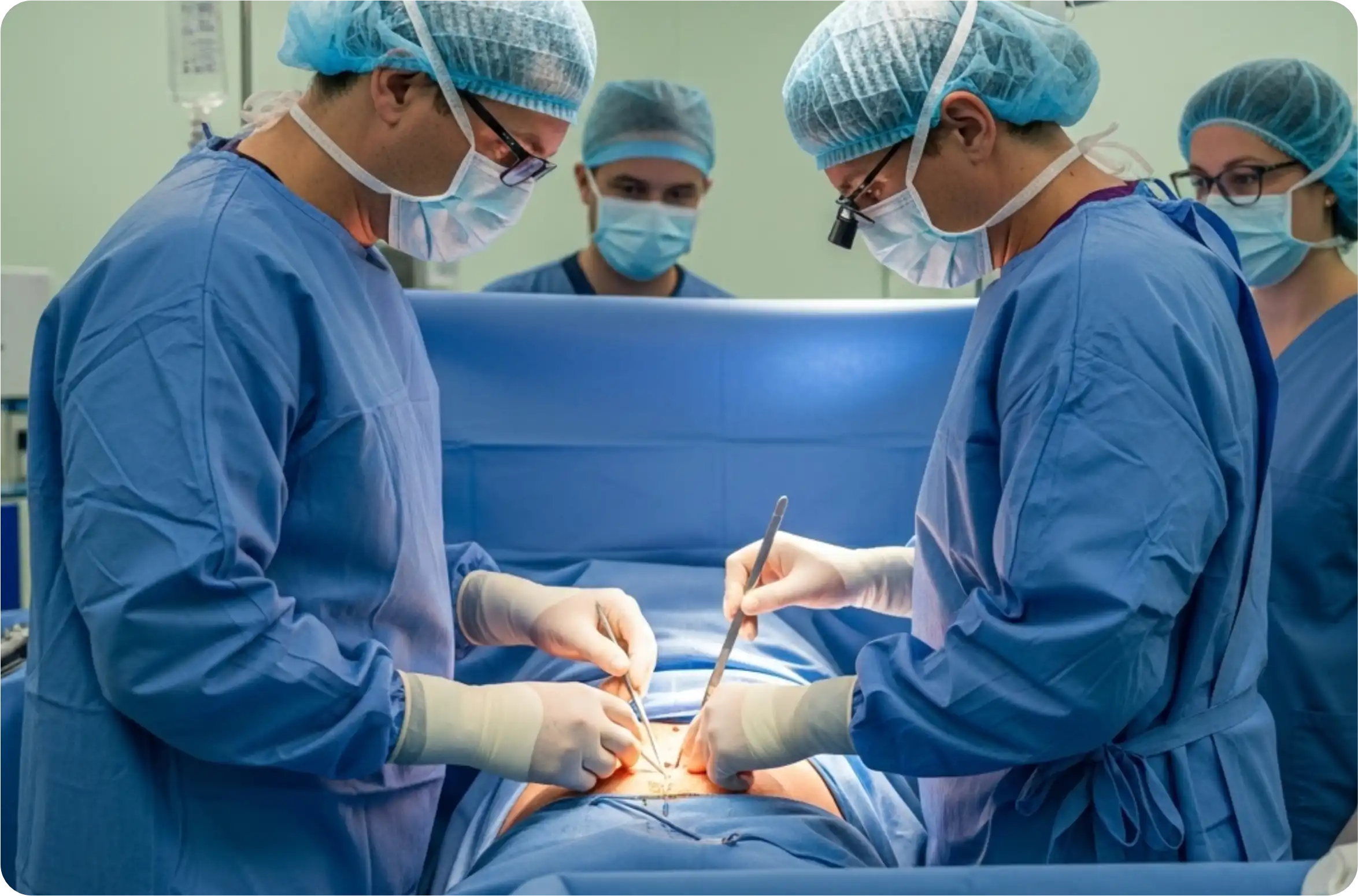






The Department of General Surgery is one of the major clinical departments involved in the provision of comprehensive surgical care for a wide range of elective and emergency surgical conditions. The department treats disorders of the gastrointestinal tract, hepatobiliary system, endocrine glands, breast diseases, abdominal wall defects, trauma, vascular diseases, soft tissue infections, and other acute surgical emergencies.
The department is a full-service surgical unit offering outpatient consultations, emergency trauma services, inpatient management, operative interventions, post-operative intensive care and long-term surgical follow-up. The department is also actively involved in undergraduate and postgraduate teaching, clinical training, academic discussions, research activities and patient care.
This is headed by Dr Amit Agarwal who is responsible for clinical services, operative management, academic activities and departmental administration. The department also coordinates with subspecialty experts, including Dr Rajib Mazumdar for neurosurgical services, Dr Shipra for plastic and reconstructive surgery, and dedicated urology support for genitourinary surgical disorders.
The department emphasizes evidence-based surgical practice, multidisciplinary collaboration, patient safety and quality surgical outcomes. The department is equipped with all the modern operation theatre facilities, latest surgical equipment and ICU backup to handle routine and complex surgical cases efficiently.
Key Differentiators
Advanced Technologies
Modular Operation Theatre Complex
The OT complex has central oxygen, suction, and multiparameter monitoring, and the fully modular theatres are designed to keep everything sterile at every stage of a procedure. Major and minor OTs function independently, so an emergency case never displaces a planned surgery already underway.
Laparoscopic Surgery Tower
Laparoscopic towers are available for minimally invasive work across gastrointestinal, hepatobiliary, endocrine, and abdominal wall cases reducing blood loss, shortening recovery, and keeping incisions small without limiting what the surgeon can do. Electrocautery units, vessel sealers, suction-irrigation systems, staplers, and advanced retractors sit alongside as standard operative support.
Advanced Diagnostic & Imaging Support
Ultrasonography, digital X-ray, CT, MRI, and Doppler studies are all accessible to the department for preoperative workup, trauma assessment, vascular evaluation, and hepatobiliary imaging. Surgeons go into the operating theatre with a complete diagnostic picture already in hand, not piecing it together afterwards.
Endoscopic Services
Upper GI and lower GI endoscopy handle both diagnostic and therapeutic needs across oesophageal, gastric, duodenal, and colorectal conditions often resolving what would otherwise require open access. Biopsy, polypectomy, haemostasis, and foreign body retrieval are among the procedures managed endoscopically within the department.
Critical Care & Postoperative Monitoring
Ventilator support and invasive haemodynamic monitoring are available for patients coming out of major surgery, polytrauma resuscitation, or gastrointestinal emergencies that cross into the critical care threshold. ICU-level observation runs continuously, with the surgical team remaining closely involved in postoperative decision-making rather than handing patients over entirely.
Procedures
Emergency Surgical Operations
A large percentage of the department’s work is emergency surgeries. The department routinely conducts exploratory laparotomy, surgery for perforation peritonitis, appendicectomy, surgery for intestinal obstruction, trauma laparotomy, surgery for strangulated hernia, bowel resection with anastomosis, splenectomy, abscess drainage and debridement for necrotising fasciitis.
These procedures are often life-saving and require rapid clinical assessment, prompt surgical intervention and intensive postoperative care. Early management of acute surgical emergencies prevents complications such as sepsis, organ failure and prolonged hospitalisation.
Surgical Procedures Elective
A number of elective surgeries are performed by the department for planned management of surgical conditions. The common elective procedures are open and laparoscopic cholecystectomy, open and laparoscopic hernia repair, incisional hernia repair, thyroidectomy, hemithyroidectomy, breast lump excision, modified radical mastectomy, hemorrhoidectomy, fistulectomy, fissure surgery, hydrocele surgery, varicocele surgery, and orchidopexy.
Elective procedures are carefully planned following detailed clinical assessment, imaging studies and preoperative optimisation to ensure patient safety and successful surgical outcomes. Minimally invasive procedures such as laparoscopy can reduce postoperative pain, recovery time, and improve cosmetic results.
Surgical Procedures, Gastrointestinal
The department deals with various surgical disorders of the gastrointestinal tract in the form of small bowel resection, right hemicolectomy, colostomy, ileostomy and stoma closure surgeries. These procedures are usually done for intestinal obstruction, perforation, tumours, inflammatory bowel diseases, trauma and other abdominal conditions
In gastrointestinal surgery, it is impossible to overstate the importance of comprehensive perioperative care and postoperative monitoring in maintaining nutritional status, preventing complications, and promoting patient recovery.
Hepatobiliary Surgery
The department performs hepatobiliary procedures such as common bile duct (CBD) exploration and biliary drainage surgeries for management of biliary obstruction, gallstone disease and hepatobiliary infections. These techniques require careful surgical planning and imaging guidance to safely manage complex biliary pathology.
Early intervention in hepatobiliary disorders helps to prevent complications such as cholangitis, obstructive jaundice, pancreatitis and liver dysfunction.
Neurosurgery Services
The department is headed by Dr. Rajib Mazumdar. It provides neurosurgical services for head injury, intracranial emergencies, burr hole procedures, spinal trauma stabilization and emergency neurosurgery.
The significance of early neurosurgical intervention in trauma is evident in the fact that early decompression and stabilization can substantially improve neurological outcomes and decrease long-term complications.
Plastic & Reconstructive Surgery Procedures
Dr. Shipra’s plastic and reconstructive surgeries include skin grafting, flap coverage, contracture release, burn wound care, soft tissue reconstruction and complex wound management.
These procedures play an important role in restoring function, improving wound healing, reducing deformities and improving cosmetic results following trauma, burns, infections or surgical excision.
Urology Procedures
Dedicated urology services are supportive in management of genitourinary disorders such as circumcision, hydrocele surgery, orchiectomy, suprapubic cystostomy, urethral catheter related procedures, stone disease management and prostate related interventions.
These procedures effectively treat male genitourinary surgical diseases over a broad range; they relieve urinary obstruction, treat infections and improve urinary function.