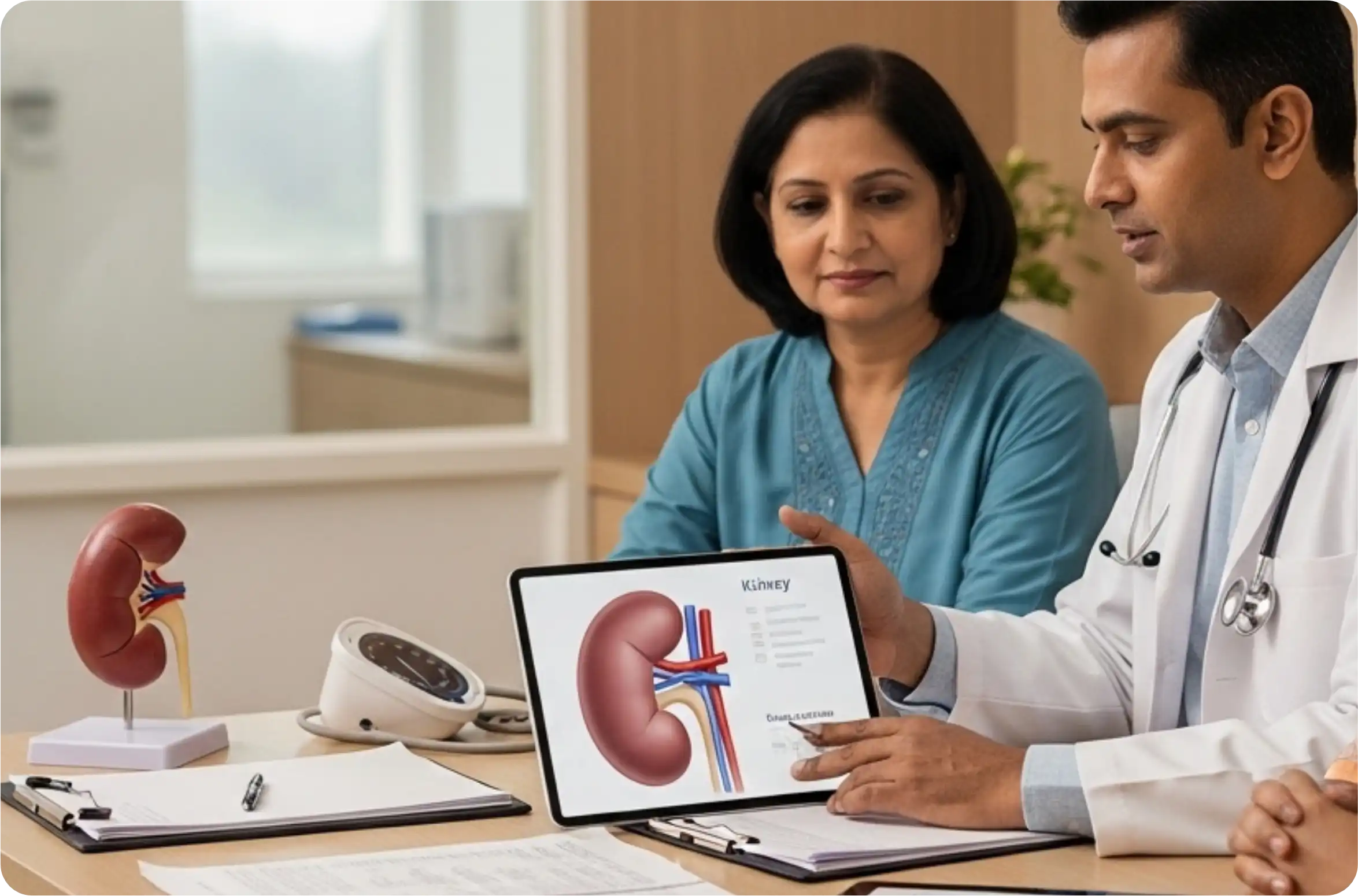




The Department of Nephrology at Saraswathi Institute of Medical Sciences handles one of the most serious areas of medicine, kidney disease. Kidney problems rarely come alone. They show up with diabetes, high blood pressure, heart disease, and critical illness, and managing them properly needs a team that knows what they are doing and can act fast when things get worse.
The department runs under the guidance of Dr Gaurav, supported by doctors, nurses, and dialysis technicians who manage both planned kidney care and emergencies. The team is experienced and genuinely invested in patient outcomes, not just clinically, but in understanding what living with Chronic Kidney Disease (CKD) or End-Stage Renal Disease (ESRD) actually means for a person day to day.
Conditions managed here include:
• Acute Kidney Injury (AKI)
• Chronic Kidney Disease (CKD)
• End-Stage Renal Disease (ESRD)
• Hypertension-related kidney disorders
• Diabetic kidney disease
• Electrolyte and fluid imbalance disorders
With a fully equipped dialysis centre and 24×7 emergency renal support, the department handles both stable patients on regular hemodialysis and critically ill patients needing urgent renal replacement therapy.
Key Differentiators
Advanced Technologies
Hemodialysis
The department provides hemodialysis with high-performance machines, picked for routine maintenance dialysis as well as emergency dialysis and ICU dialysis. They also cover high-efficiency dialysis procedures in a very workable way. These machines handle fluid removal with real precision, they keep the patient stable during the session, and they clear wastes and toxins that the kidneys just cannot manage anymore by themselves.
SLED (Sustained Low-Efficiency Dialysis)
SLED (Sustained Low-Efficiency Dialysis) is a specialised approach used when a patient is too unstable for standard haemodialysis. For critically ill patients, especially those in the ICU, fast fluid movement can lead to unsafe drops in blood pressure, so it matters. With SLED, the treatment is delivered more slowly over a longer window, meaning a few things at once:
• More steady blood pressure during the session
• Better tolerance in people who are already very unwell
• Gradual removal of fluid and toxins without really pushing on the cardiovascular system
• A reduced risk profile, compared with conventional dialysis when the patient is unstable
In other words, for patients who cannot cope with regular dialysis, SLED is often what makes the whole treatment possible.
Advanced ICU Dialysis Machines
The ICU dialysis machines used here provide continuous renal replacement therapy, exact ultrafiltration, and safer dialysis for high-risk patients. The care team can tune the treatment settings in real time, which is essential when you’re managing critically ill patients whose status can change quickly, sometimes without much warning.
Procedures
Hemodialysis
Both routine and emergency haemodialysis are performed for patients with chronic kidney disease, acute kidney injury, end-stage renal disease, and severe metabolic disturbances. Each patient gets an individualised dialysis plan. Frequency, duration, and session parameters are set based on that specific patient's clinical condition and requirements, not a standard protocol applied to everyone.
AV Fistula Creation
For patients who need long-term dialysis, proper vascular access is not optional, it is essential. The department performs Arteriovenous (AV) fistula creation, a surgical procedure that joins an artery and a vein, usually in the arm, to create a durable, high-flow access point for hemodialysis. An AV fistula carries a lower infection risk than catheters, lasts longer, and gives better blood flow during dialysis sessions. The department plans this well in advance for CKD patients heading toward dialysis because a fistula needs time to mature before it can be used clinically.
IJV Catheter Placement
When a patient needs dialysis urgently and permanent access is not yet ready, an Internal Jugular Vein (IJV) catheter is inserted to provide immediate temporary vascular access. This is done under strict sterile conditions to reduce the risk of catheter-related infection and other complications. It lets the team begin dialysis right away, while the longer-term access, like an AV fistula, is being prepped.
Dialysis Catheter Removal
Once permanent vascular access is working, or when temporary access is no longer needed, the dialysis catheter is removed under proper precautions. Leaving a catheter in place longer than necessary increases the risk of infection and vascular complications. Careful catheter management is a standard part of how the department keeps dialysis patients safe over time.